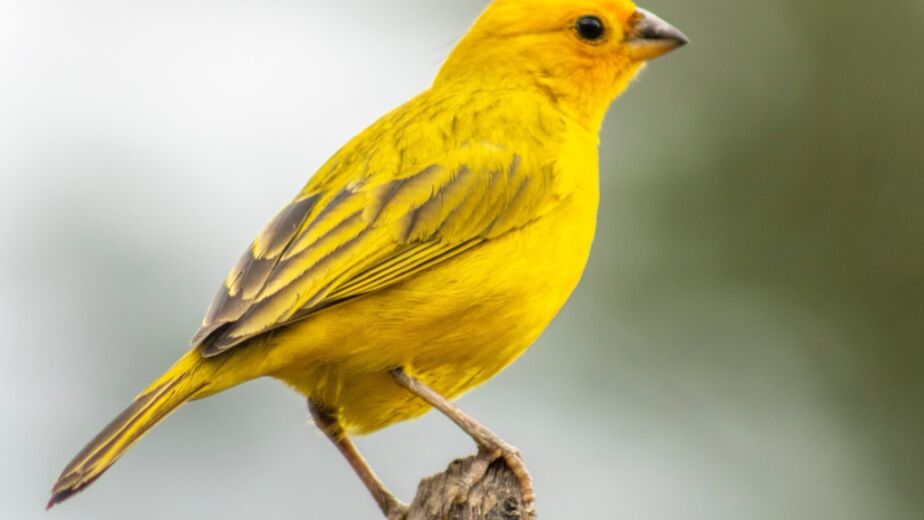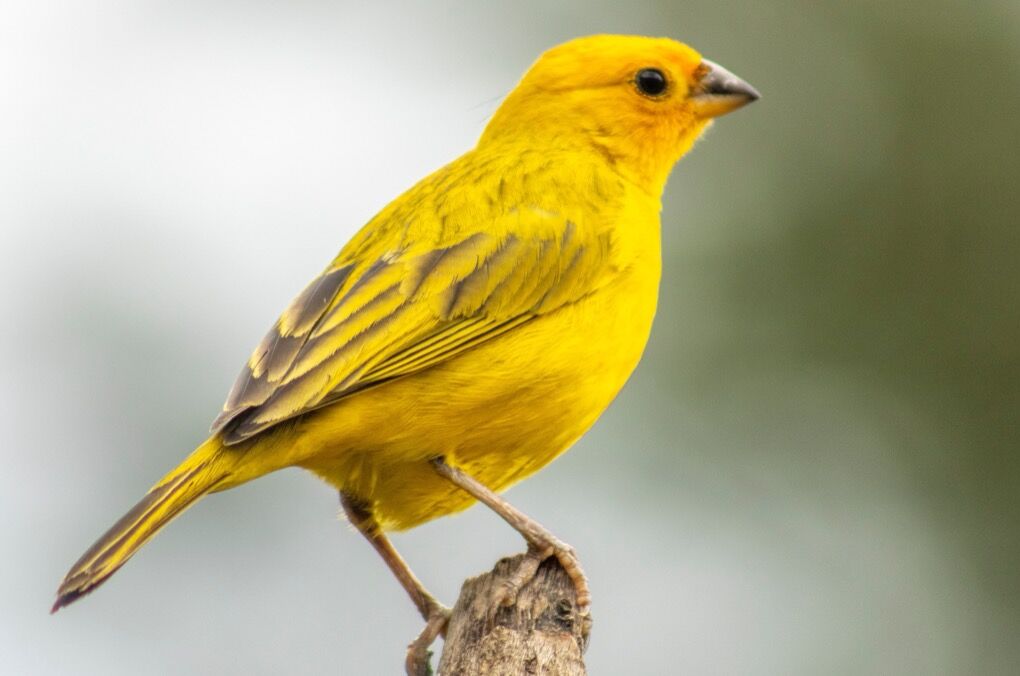
Imagine a world painted with the most vivid yellows – the color of sunshine, of golden dawns. This is the world of the Saffron Finch, a small bird that brings the brightness of tropical sunlight to the landscapes it inhabits. Known for its striking plumage and spirited song, the Saffron Finch is not just a treat for the eyes and ears but also a fascinating subject for scientists and bird lovers alike.
Characteristics / Physical Description
The Saffron Finch, typically about 13 to 15 cm in length, is renowned for its bright yellow body, with shades ranging from a soft lemon to a deep saffron, giving the bird its common name. The males are particularly vibrant, with orange crowns in some subspecies, while the females and young birds tend to have a more muted coloration. Their strong, conical beaks hint at their seed-eating habits, and their agile bodies are well-adapted to a life spent mostly in the trees.
Taxonomy and Classification
Scientifically known as Sicalis flaveola, the Saffron Finch belongs to the family Thraupidae, which includes tanagers. This bird is not a true finch as suggested by its common name. The taxonomy of the Saffron Finch is complex, with several subspecies recognized across its range, differentiated by slight variations in plumage and size.
Behavior and Social Structure
Saffron Finches are gregarious outside the breeding season, often seen in flocks that forage together. During the breeding season, however, males become territorial and can be observed performing vivid displays to attract mates and deter rivals. Their song is a mix of melodious chirps and trills, which serves both to court females and communicate within the flock.
Habitat and Distribution
Native to South America, the range of the Saffron Finch spans from Venezuela to northern Argentina, inhabiting a variety of open and semi-open areas from grasslands to gardens and agricultural lands. They adapt well to modified habitats, which has helped them thrive in areas impacted by human activity.
Diet and Feeding Habits
Primarily seed eaters, Saffron Finches also include insects in their diet, especially during the breeding season when they need additional protein. They typically forage on the ground and are often seen pecking at fallen seeds and chasing after insects.
Breeding and Reproduction
Breeding occurs in response to the rainy season, which varies across their geographic range. Saffron Finches build cup-shaped nests in which the female lays and incubates eggs. Both parents are involved in feeding the chicks, which grow quickly and are ready to fledge within a few weeks.
Relationship with Humans
Saffron Finches have generally benefited from human disturbances in their habitat. They are also popular in the pet trade due to their striking appearance and melodious song, although this has led to illegal trapping and trading issues in some areas. Conservation efforts are important to ensure that wild populations do not decline due to pet trade pressures.
Evolutionary History
The evolutionary history of the Saffron Finch is typical of many South American birds, with ancestors that likely diversified during the uplift of the Andes, creating new ecological niches and isolated populations that evolved into distinct subspecies.
Use as Research Animals
While not commonly used as research animals, Saffron Finches contribute to studies on avian biology, particularly in understanding the ecological impacts of habitat changes and the dynamics of songbird populations in altered landscapes.
Ending on a bright note, the Saffron Finch continues to thrive in its colorful existence, weaving the golden threads of its presence through the fabric of South America’s bird tapestry. Its resilience and adaptability remind us of nature’s enduring vibrancy, even in changing environments.