Rabbits are often symbolized as creatures of vitality and innocence, but the black rabbit, with its unique dark fur, stands out among its more commonly recognized cousins. This article delves into the life of the black rabbit, scientifically known as Lepus nigricollis, exploring its characteristics, behaviors, and interactions with the environment and humans.
Characteristics / Physical Description
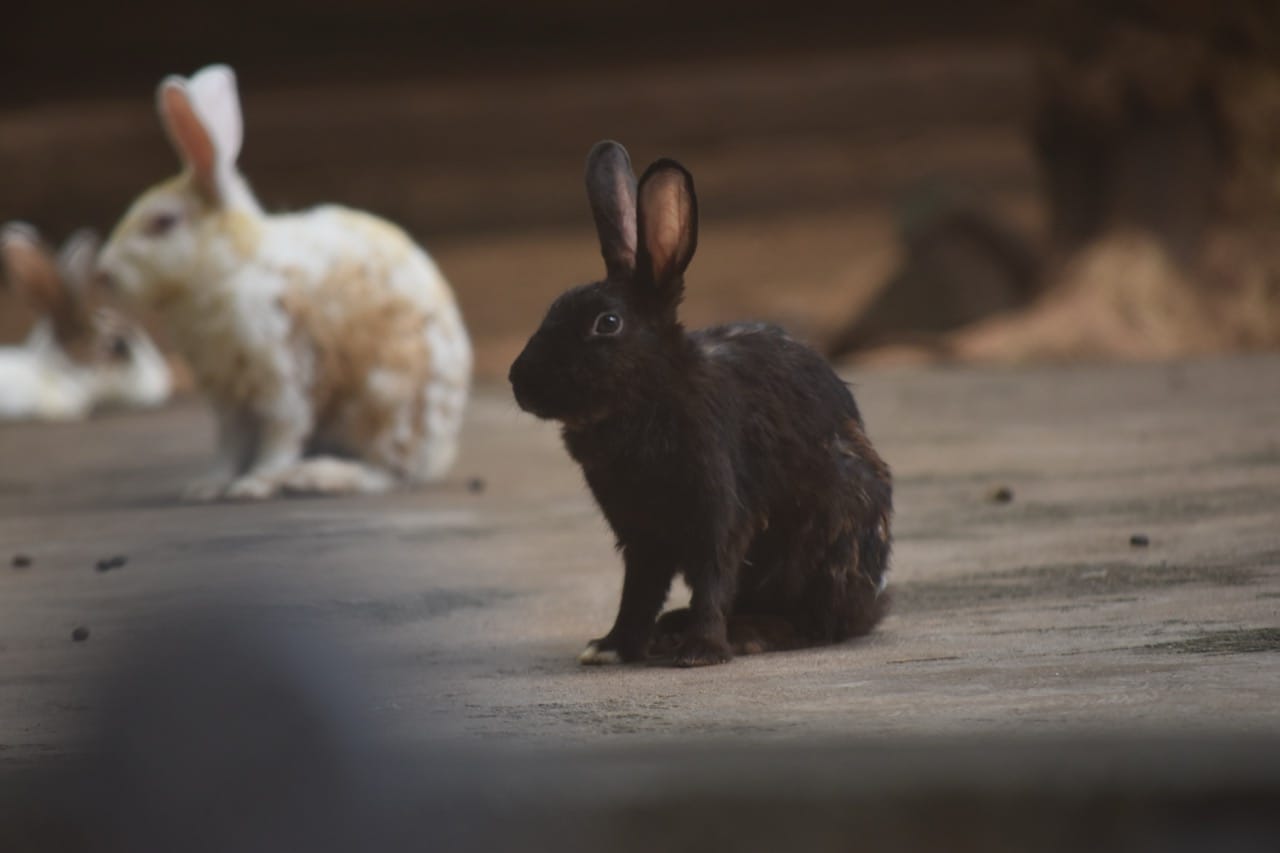
The black rabbit is a small to medium-sized mammal, known for its distinctive dark fur which ranges from deep black to dark brown. Adult black rabbits typically weigh between 1.5 to 2.5 kilograms and measure about 40 to 50 centimeters in length. They possess long ears, which can be as long as 7 centimeters, and powerful hind legs designed for rapid movement. Their eyes are large and typically dark brown, providing them with excellent night vision.
Taxonomy and Classification
Lepus nigricollis belongs to the family Leporidae, which includes all species of rabbits and hares. This species is further categorized under the genus Lepus, distinguished by their long ears and legs, and their ability to run quickly. The classification helps in understanding the evolutionary adaptations that have enabled this species to thrive in diverse environments.
Behavior and Social Structure
Black rabbits are generally crepuscular, being most active during twilight hours. They are known for their shy and skittish behavior, often freezing in place to avoid detection by predators. Socially, black rabbits can vary from being solitary to forming small groups, especially when in a habitat that supports their need for constant vigilance against predators.
Habitat and Distribution
Lepus nigricollis is adaptable to a variety of habitats but predominantly occupies areas with dense vegetation which provides cover and food sources. These rabbits are commonly found in grasslands, woods, and agricultural areas where they can blend into the background. While they are widely distributed, their populations are densest in areas that support their need for cover and abundant vegetation.
Diet and Feeding Habits
As herbivores, black rabbits primarily feed on grass, leaves, twigs, and fruits. Their diet varies with the availability of food sources in different seasons. During the winter months, when green vegetation is scarce, they may consume bark and evergreen needles.
Breeding and Reproduction
Black rabbits are prolific breeders. Females can have multiple litters each year, with each litter consisting of 3 to 7 young. The gestation period lasts about 28 to 31 days, and the young are born blind and furless. The kits develop quickly and are weaned off at about a month old, reaching sexual maturity rapidly to continue the cycle of reproduction.
Relationship with Humans
Historically, rabbits have been associated with various cultural myths and are popular as pets. The black rabbit, with its striking appearance, has also been bred for its fur and meat. However, in agricultural settings, they are often considered pests due to their tendency to feed on crops.
Evolutionary History
The evolutionary trajectory of the black rabbit suggests adaptations that favor survival in environments with variable resources and predation pressures. Their ability to reproduce quickly, combined with their nocturnal habits, are evolutionary traits that have enabled their survival through centuries.
Use as Research Animals
In scientific research, rabbits are often used as models for human diseases due to their physiological and genetic similarities to humans. Black rabbits, due to their distinct genetic markers, provide additional value in genetic research, helping scientists understand the implications of melanism and other genetic variations.
The black rabbit is not just a charming creature but also a fascinating subject for scientific study and observation. Its ability to adapt and thrive in various environments makes it a resilient species, worthy of admiration and protection.