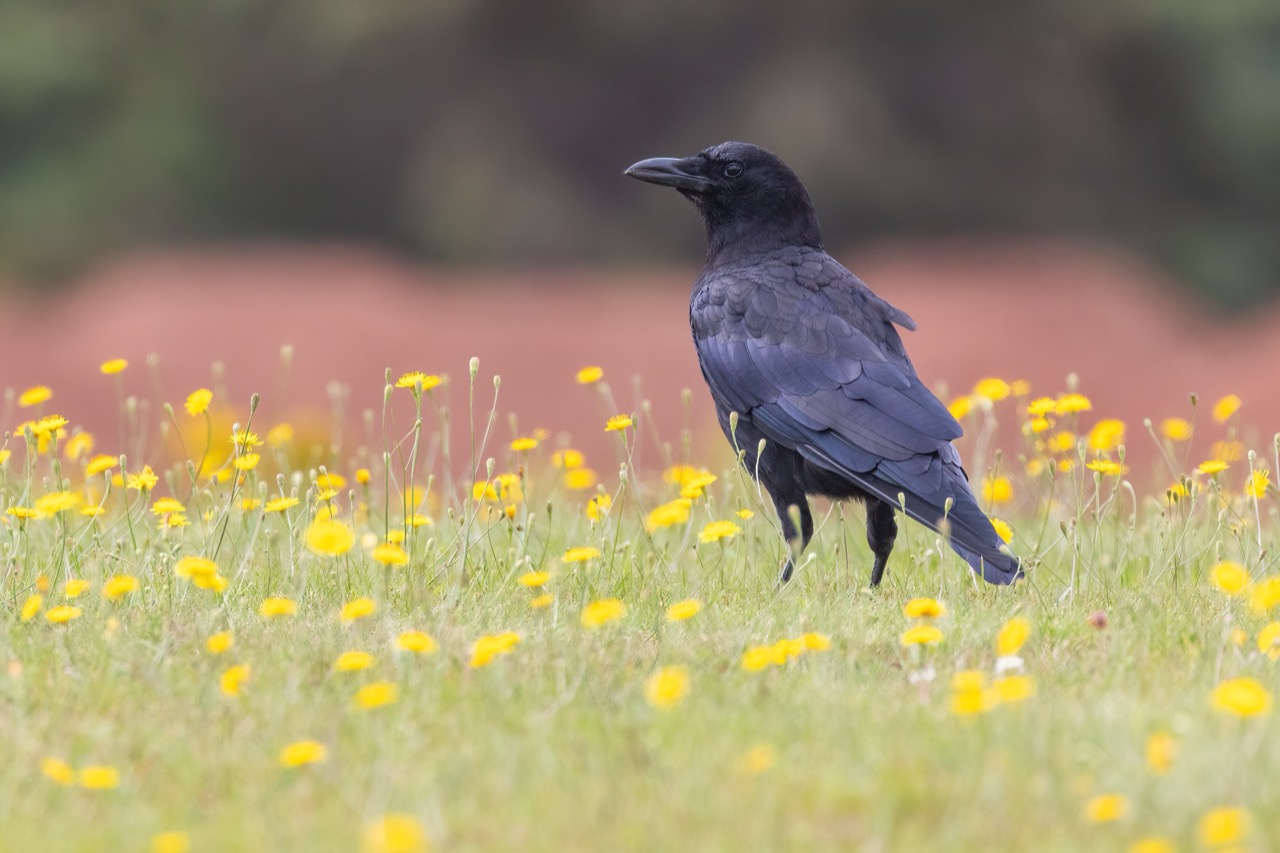
Crows, often symbols of mystery in various cultures, are among the most intelligent birds in the world. These black-feathered creatures, belonging to the genus Corvus, exhibit remarkable cognitive abilities and complex social behaviors, making them fascinating subjects of scientific study and mythology.
Characteristics / Physical Description
The American Crow, Corvus brachyrhynchos, typically measures around 17 to 21 inches in length, with a wingspan of 33 to 39 inches. Their plumage is entirely black with a slight iridescent sheen. The bill, legs, and feet are also black. Crows have robust and broad wings which contribute to their strong and direct flight. Their eyes are particularly expressive and dark, helping in communication among their kind.
Taxonomy and Classification
Crows are part of the family Corvidae, which also includes ravens, jays, and magpies. This family is renowned for its intelligent members. The American Crow itself is categorized under the genus Corvus, one of the most widespread of the group. There are several subspecies of Corvus brachyrhynchos, differentiated mostly by their geographical range and slight variations in size.
Behavior and Social Structure
Crows are highly social and are rarely found alone. They can form flocks in the thousands, especially in winter roosts. Their social system is complex, involving family groups that may include young from previous broods. Crows communicate through a variety of calls, each of which can vary in meaning based on context. They are known for their problem-solving skills and have the ability to use tools, a trait that puts them on par with primates in terms of cognitive abilities.
Habitat and Distribution
The American Crow is extremely adaptable and can thrive in a wide range of environments including forests, fields, suburban neighborhoods, and urban centers. They are common across North America, from Canada down through the United States to Mexico. Their adaptability has allowed them to become one of the most ubiquitous bird species on the continent.
Diet and Feeding Habits
Crows are omnivores and their diet is incredibly diverse. They eat insects, worms, seeds, grains, fruits, and small animals. They are also known to scavenge, which helps in cleaning up carrion and reduces the spread of disease. Crows have been observed using cars as nutcrackers, dropping hard-shelled nuts onto roads and waiting for vehicles to break them open.
Breeding and Reproduction
Crows are monogamous, typically forming pairs that last several years. Nests are built high in trees and both parents help in nurturing the young. Typically, they lay 3-5 eggs per clutch, which are incubated for about 18 days. The young are then fed by both parents and may stay with the family for up to two years.
Relationship with Humans
Historically, crows have had a mixed relationship with humans. They are often considered pests because they can damage crops. However, their role in ecosystem management and waste cleanup is beneficial. Increasingly, their intelligence has garnered respect and fascination, leading to better human-crow dynamics through various educational programs that highlight their ecological importance.
Evolutionary History
Crows share a common ancestor with all Corvidae, dating back millions of years. Their evolutionary success is largely attributed to their adaptability and intelligence. Studies of their brain structure have shown that they have a high neuron density, comparable to that of primates, which supports their complex cognitive functions.
Use as Research Animals
Crows have become subjects in numerous scientific studies aimed at understanding cognition and social behavior in animals. Their ability to solve puzzles, remember human faces, and even plan for future needs are topics of ongoing research, providing insights not only into avian intelligence but also into the workings of the animal mind in general.