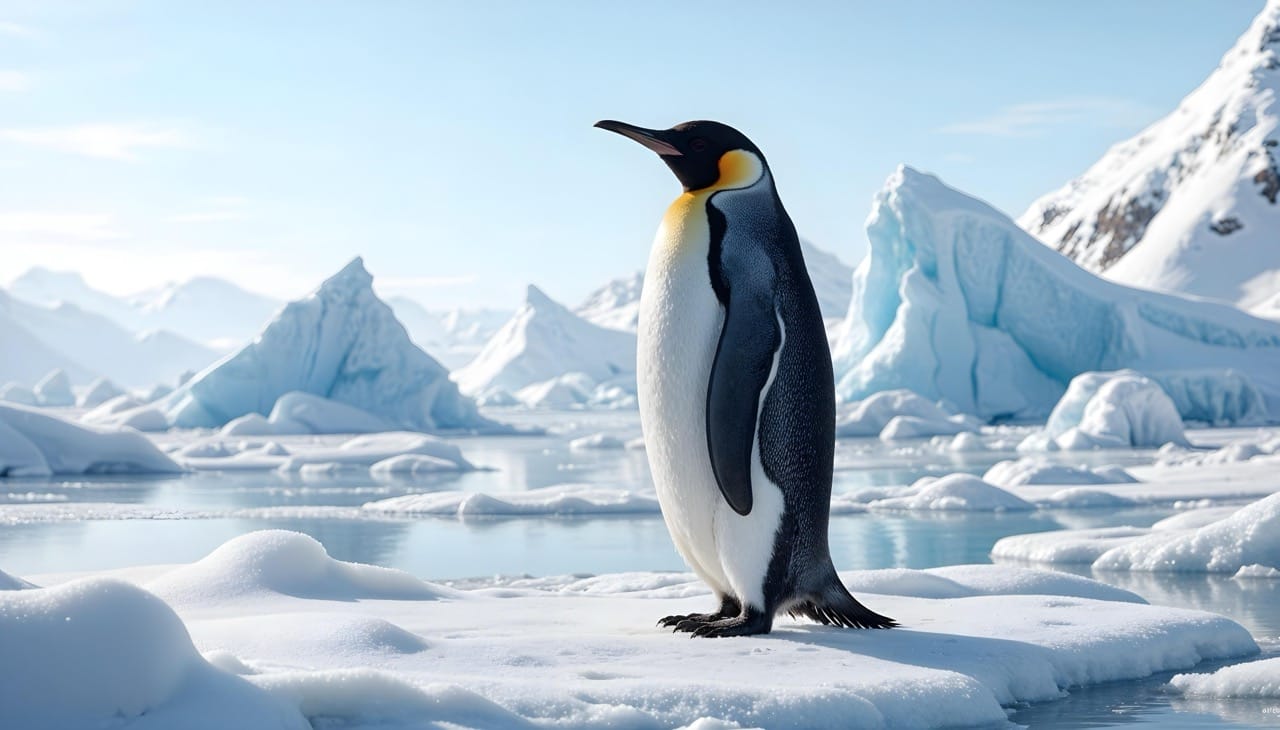
Emperor penguins (Aptenodytes forsteri) are not only the tallest and heaviest of all penguin species but are also among the most endearing symbols of Antarctica’s wildlife. These birds are renowned for their incredible resilience and complex social behaviors, thriving in one of Earth’s harshest environments. The sight of an emperor penguin colony, with thousands of birds huddled together against the relentless cold, is a poignant image of survival and communal strength. This article explores the fascinating world of emperor penguins, delving into their unique physical characteristics, social structures, and the critical challenges they face due to changing climates.
Characteristics / Physical Description
Emperor penguins can stand nearly 4 feet tall and weigh between 22 to 45 kilograms. Their striking black and white plumage and bright yellow ear patches make them one of the most iconic bird species. Adaptations like their dense, waterproof feathers, a thick layer of fat, and specialized circulation in their extremities enable them to maintain body heat and survive the extreme cold of their icy habitat.
Taxonomy and Classification
Belonging to the bird family Spheniscidae, emperor penguins are classified under the genus Aptenodytes. They share this genus with only one other species, the king penguin. These birds are highly adapted to life in aquatic environments, with streamlined bodies and powerful flippers suited for efficient swimming.
Behavior and Social Structure
Emperor penguins are social animals, known for their cooperative behaviors, especially during the brutal Antarctic winter. They form large colonies that provide protection against predators and assist in managing the extreme cold. A notable behavior is their huddle; by packing tightly together, they share body heat, crucial for survival during the winter months.
Habitat and Distribution
The emperor penguin is endemic to Antarctica. They breed on stable pack ice around the continent and are dependent on both the sea and the ice for breeding and feeding. The specific choice of breeding sites near open water ensures access to food and ease of launching into the sea.
Diet and Feeding Habits
These penguins are formidable hunters, diving deep into the ocean to feed primarily on fish, krill, and squid. They can dive deeper than any other bird, reaching depths of over 500 meters and can stay underwater for around 20 minutes before needing to surface.
Breeding and Reproduction
Breeding begins in March or April, with each female laying a single egg. Remarkably, male emperors incubate the egg on their feet under a flap of abdominal skin, called a brood pouch, throughout the harsh winter months. During this time, females journey to the sea to feed. Males endure temperatures as low as -50°C and winds up to 200 km/h, without eating, for over two months until the eggs hatch.
Relationship with Humans
While having no significant direct interactions with humans due to their remote habitat, emperor penguins have become icons of Antarctic conservation efforts. They are featured prominently in media and documentaries, which have helped raise awareness about the impacts of climate change on polar regions.
Evolutionary History
Emperor penguins are believed to have split from other penguin species around 2 million years ago. Their evolutionary adaptations have perfectly equipped them for survival in Antarctica, showcasing a remarkable case of evolutionary specialization.
Use as Research Animals
Emperor penguins are vital to scientific studies, especially in research related to environmental change. Studies on their breeding patterns and population dynamics help scientists predict the impacts of climate change on marine biodiversity in the Antarctic.
Emperor penguins continue to fascinate and inspire, representing resilience in the face of adversity. As ambassadors of their increasingly vulnerable ecosystem, they remind us of the urgent need for environmental stewardship to preserve the unique wildlife of the Antarctic.