Introduction and Background
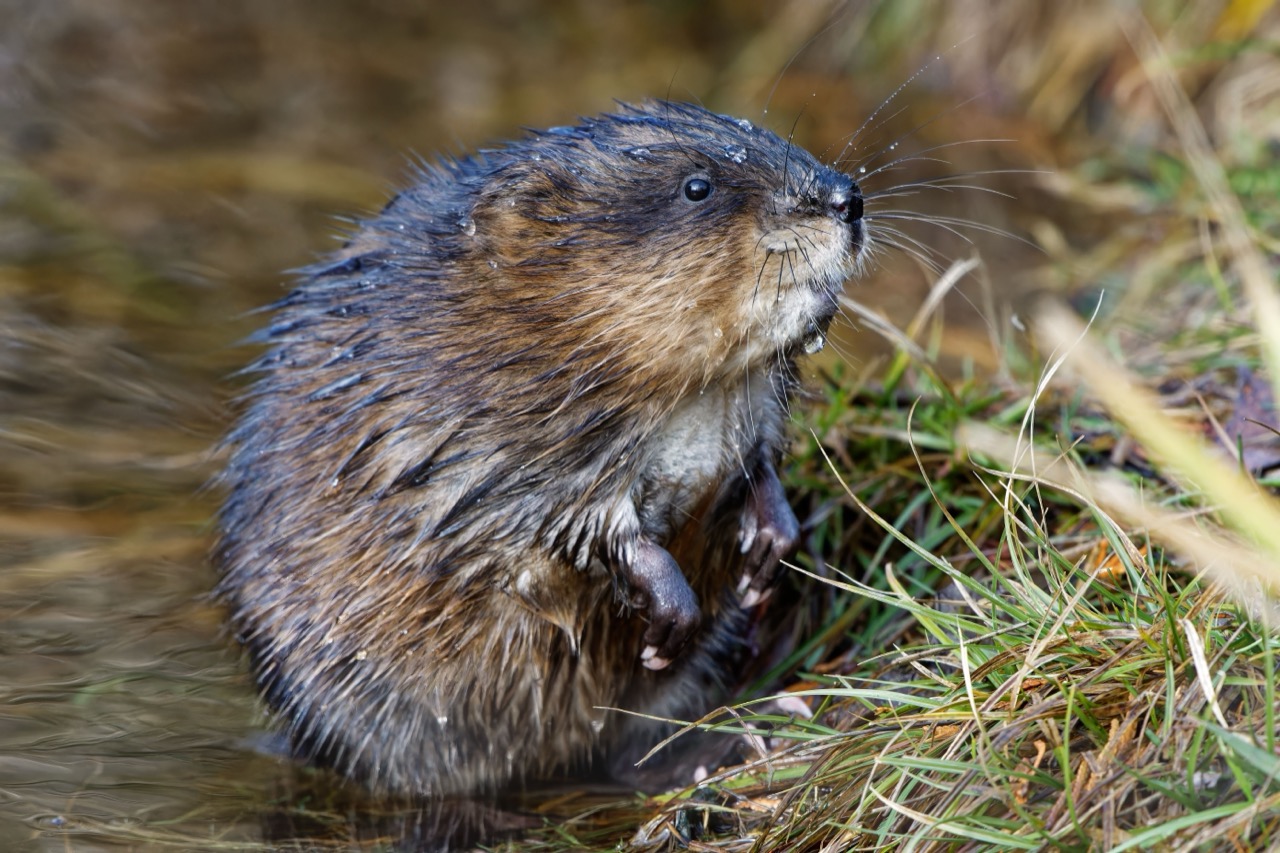
The muskrat (Ondatra zibethicus) is a semi-aquatic rodent native to North America, but today it can also be found in parts of Europe, Asia, and South America due to human introduction. Despite its name, it is not a rat at all, though its size and appearance often invite the comparison. Muskrats are medium-sized rodents, typically weighing 1–2 kg (2–4 lbs), and they are best known for their dense fur, paddle-like tails, and remarkable engineering skills in wetland environments. Their ability to shape and maintain aquatic ecosystems makes them one of the most fascinating small mammals of the Northern Hemisphere.
Habitat and Natural Environment
Muskrats are strongly tied to wetlands, ponds, lakes, rivers, and marshes, where they dig burrows into muddy banks or construct dome-shaped lodges out of vegetation. These homes are built with underwater entrances for protection, a clever adaptation that helps them evade predators.
Native to North America, muskrats have thrived in diverse climates ranging from the icy waters of Canada to the warmer wetlands of the southern United States. Their introduction abroad has been less welcome, however—muskrats have been considered invasive in parts of Europe, where their burrowing and feeding can damage riverbanks and agricultural land.
Diet and Daily Life
Muskrats are primarily herbivores, feeding on cattails, sedges, water lilies, and other aquatic plants. In winter, when greenery is scarce, they may consume roots or even small animals like freshwater mussels and frogs.
They are most active at dusk and during the night, often spending hours swimming and foraging. Socially, muskrats live in small family groups, and during the breeding season (spring to late summer), females can produce multiple litters of 6–8 young, ensuring population growth even in challenging conditions.
Unique Adaptations and Abilities
Muskrats possess several remarkable adaptations that make them masters of watery environments:
- Partially webbed hind feet allow for efficient swimming.
- Their laterally flattened tail acts like a rudder, propelling them through the water.
- Muskrats can hold their breath for up to 15 minutes, far longer than many animals their size.
- They build lodges and feeding platforms with vegetation, altering their environment in ways similar to beavers (though on a smaller scale).
Interactions with Humans
Historically, muskrats have been valuable to humans for their fur, which is warm, water-resistant, and widely used in the fashion industry during the 20th century. In fact, muskrat pelts once supported a thriving fur trade.
Culturally, muskrats appear in the folklore of several Indigenous peoples in North America. One well-known creation story describes the muskrat diving to the bottom of the water to bring up mud, which was then used to form the Earth.
Today, they are sometimes kept in check by wildlife managers because of their potential to damage irrigation systems and embankments. Yet, they remain an important species in wetland conservation conversations.
Challenges and Threats
In the wild, muskrats face a number of dangers:
- Predators: Foxes, mink, raccoons, owls, and snapping turtles are among their many natural enemies.
- Habitat loss: Draining wetlands for development or farming reduces their living space.
- Human management: In areas where they are invasive, muskrats are actively trapped or culled to protect ecosystems and infrastructure.
Despite these challenges, muskrats are highly adaptable and maintain stable populations in many regions.
Role in the Ecosystem
Muskrats are considered keystone species in wetland ecosystems. Their feeding habits help control aquatic vegetation, preventing overgrowth that could choke waterways. Their burrows and lodges also create habitats for fish, amphibians, and invertebrates, adding complexity to the wetland environment.
In some cases, however, their population booms can cause local damage, making them both a boon and a challenge to wetland management.
Fun Facts & Trivia
- Muskrats secrete a musky odor from special glands—this trait inspired their name.
- They are sometimes nicknamed “marsh rabbits” due to their preference for wetlands.
- Muskrats remain active in winter, often swimming under ice to reach food.
- A muskrat’s lodge is not just a home—it often doubles as a feeding station.
- In North America, some communities have traditionally eaten muskrat during Lent, with the Catholic Church permitting it as a “fish-like” food.