Starlings, often overlooked by casual birdwatchers, are in fact one of the most fascinating and adaptable birds globally. These small to medium-sized passerine birds belong to the family Sturnidae and are known for their remarkable adaptability and resilience. This article delves into the unique characteristics and ecological importance of starlings, highlighting their complex behaviors and the role they play in various ecosystems.
Characteristics / Physical Description
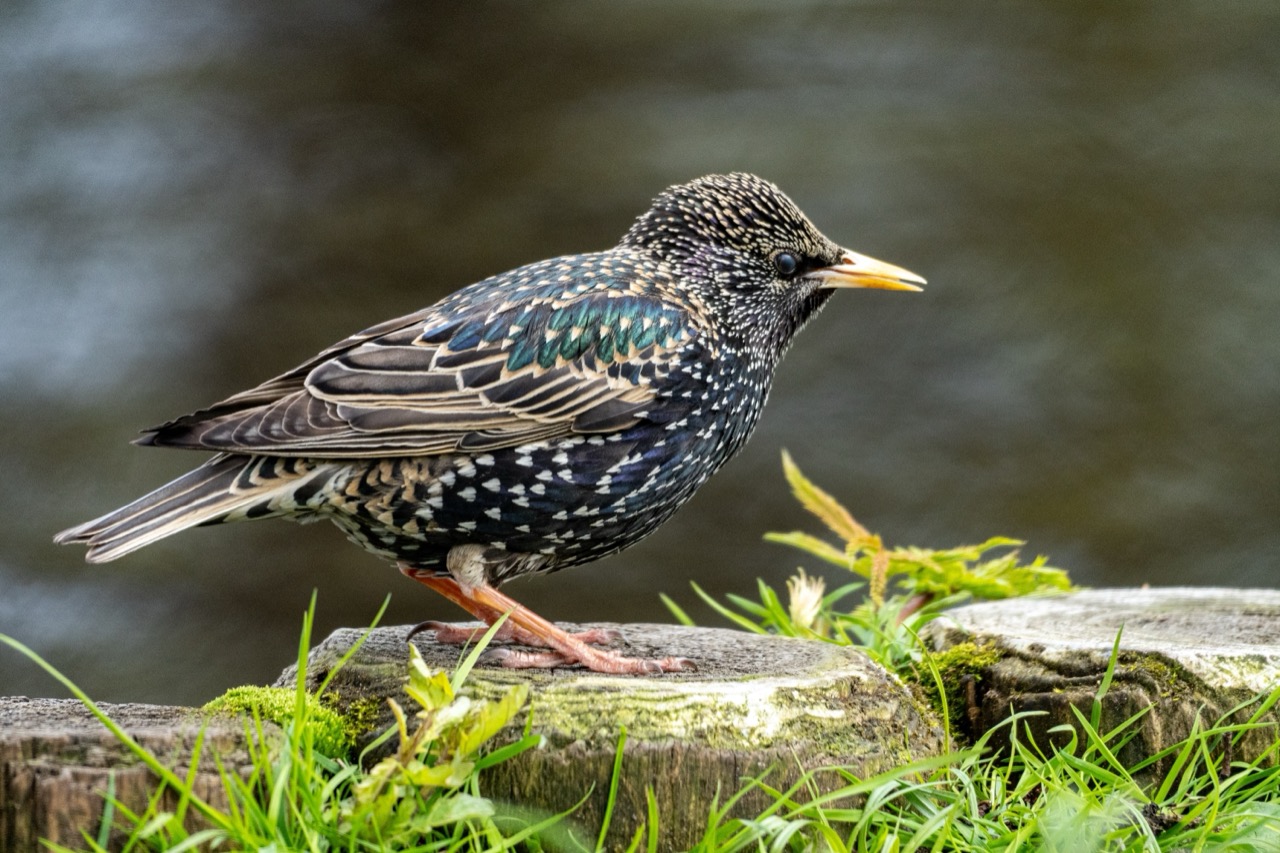
Starlings are recognized for their shiny, iridescent feathers that can shimmer with greens, blues, and purples in the sunlight. During the winter, their plumage is speckled with white dots, which is quite distinctive. They have a robust and straight bill that in summer is yellow but turns darker in winter. Their flight is fast and direct, and they are known for their fluid, acrobatic aerial maneuvers.
Taxonomy and Classification
Starlings belong to the genus Sturnus, with the common European Starling (Sturnus vulgaris) being the most widely known and studied. This genus encapsulates various species distributed across the globe, each adapted to specific environments but sharing common genetic and behavioral traits.
Behavior and Social Structure
One of the most mesmerizing sights in the avian world is the starling’s murmuration, where thousands of birds fly in swooping, intricately coordinated patterns. These displays are not just for show but are believed to be a defensive strategy against predators. Socially, starlings are gregarious and often gather in huge flocks, particularly in non-breeding seasons.
Habitat and Distribution
Originally native to Eurasia, the European starling has been introduced to South Africa, North America, Australia, and New Zealand, among other regions. They can thrive in a wide range of habitats from arid savannas to temperate forests, showing incredible adaptability. However, their success has sometimes been at the detriment of native species.
Diet and Feeding Habits
Starlings are omnivorous, feeding on a wide variety of insects, fruits, and seeds. They are opportunistic feeders and their diet can vary widely depending on the season and available resources. This adaptability in diet is one reason for their successful colonization in diverse environments.
Breeding and Reproduction
Starlings are cavity nesters, often using holes in trees or buildings to lay their eggs. They can be fiercely competitive for nesting sites. The female typically lays four to six eggs, and both parents participate in feeding the young. Their nesting habits have sometimes caused them to be viewed as pests, particularly when they inhabit urban areas.
Relationship with Humans
Starlings have a complex relationship with humans. They are admired for their beauty and the spectacle of their murmurations, but they are also often considered pests due to their habit of roosting in large numbers in urban areas, where their droppings can become a health concern. Additionally, their aggressive competition for nesting sites can displace native bird species.
Evolutionary History
Starlings are believed to have originated in Asia, from where they spread to Europe and subsequently other parts of the world through human introduction. Their evolutionary success is attributed to their versatile diet and nesting habits, allowing them to colonize a variety of ecological niches.
Use as Research Animals (if applicable)
While not commonly used in traditional laboratory research, starlings have been subjects in numerous behavioral and ecological studies. They are particularly valued in research due to their complex social structures and learning capabilities, including vocal mimicry.
Starlings, with their brilliant plumage and captivating behaviors, serve as a reminder of nature’s complexity and resilience. Their ability to adapt to diverse environments, while impressive, also challenges the balance of local ecosystems where they are introduced. As such, they remind us of the delicate interplay between species and their habitats, a balance that must be carefully managed.